
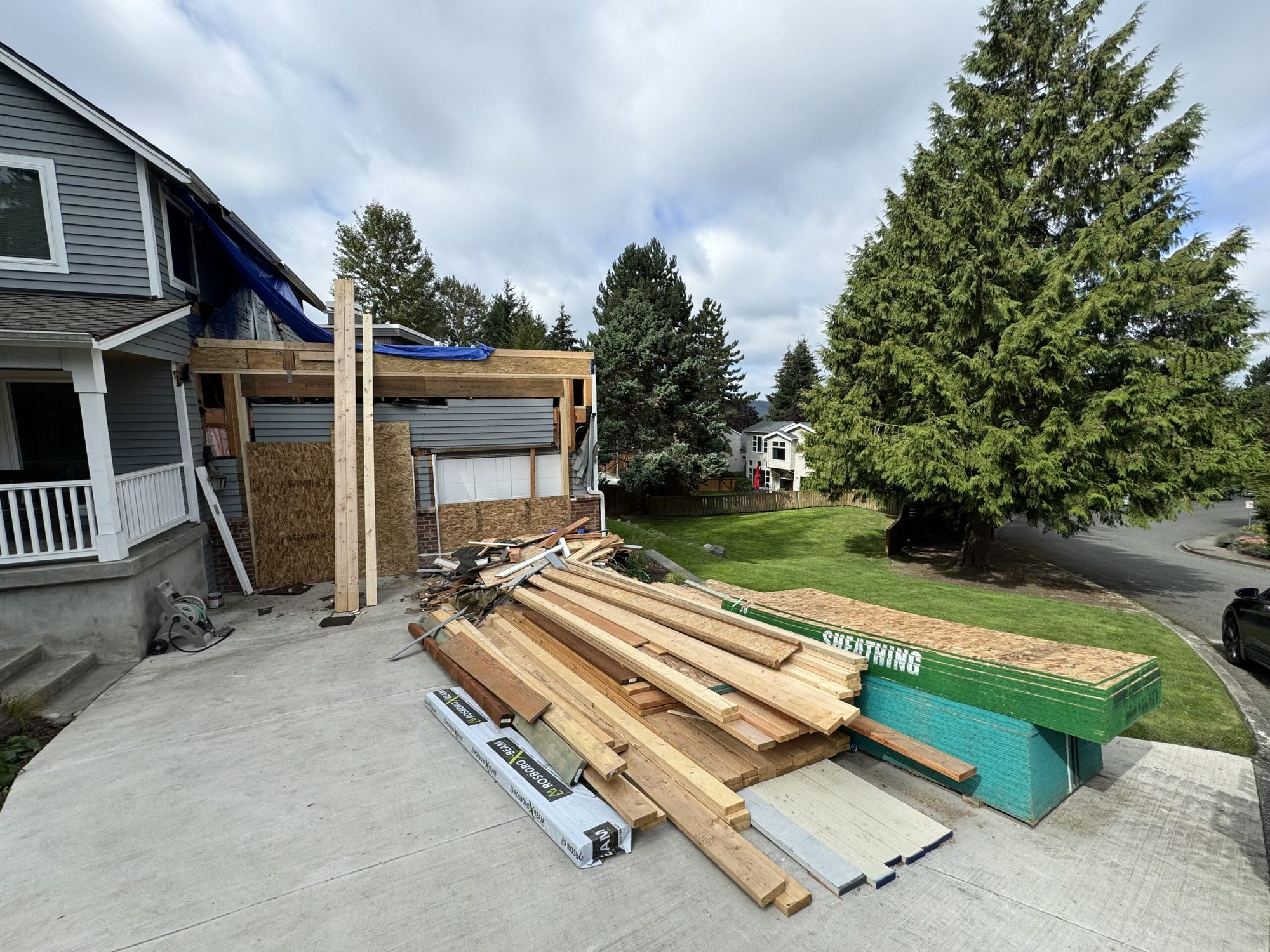
Plenty of homeowners stay in the house while it’s being remodeled. Moving out costs money, pets and kids need their routines, and some people simply want to be close enough to see the work. It’s very doable, but it goes much better with a plan: which rooms stay usable, where you’ll cook if the kitchen is down, how dust and noise get handled, and when it might be smarter to leave for a stretch.
Sit down with your contractor before demolition day and work those pieces out.
Before work starts
Decide what stays usable
Map out which rooms will be off-limits, and when. A kitchen remodel and a second-story addition affect daily life in very different ways. Know which bathroom you’ll use, which entrance the crew will use and which rooms will stay quiet. Ask how the plan changes as the project moves through its phases.
Set up a temporary kitchen
If the kitchen is part of the project, build a small one somewhere else before demolition day. A corner of the dining room, a laundry room or a garage can work. Useful pieces:
- A refrigerator or a small fridge
- A microwave, a countertop induction burner or a multicooker
- A coffee maker and an electric kettle
- A folding table for prep
- A bin of everyday dishes and a dish tub for washing up in a bathroom or laundry sink
Plan simple meals for the first couple of weeks and keep a list of nearby takeout you like. Paper plates help more than you’d think.
Pack more than you expect
Dust travels. Pack up anything near the work area, plus a buffer zone around it. Label boxes by room and keep a “first week” box with the things you’ll actually need. Move valuables, documents and anything fragile well away from the work.
Plan for kids and pets
Construction sites are full of tools, cords, openings and nails. Agree on a clear boundary that kids and pets don’t cross. For pets, think about noise and open doors. Some do fine with a quiet room and a closed door. Others are happier at a friend’s house or daycare on the loudest days.
Day to day
Dust and air
Ask how the work area will be sealed off. Plastic barriers with zipper doors, protected floors along the path in and out, and covered return vents all help keep dust in its place. You can help too: change your furnace filter more often during the project and run an air purifier in the rooms you use most.
Noise and schedule
Ask what hours the crew works, which days will be the loudest and when inspections are scheduled. Demolition, framing and some cutting are noisy. If you work from home, plan your calls around the loud days, or set up a work spot as far from the action as you can get.
Utilities
Water, power or gas may need to be shut off for short periods. Ask for a heads-up on those days so you can plan showers, laundry and meals.
Keep a clear path
Agree on the route the crew uses to come and go, and keep your own route separate when you can. A clear path keeps everyone safer and keeps dirt out of the rest of the house.
Protect your sleep
A remodel is long. Protect at least one room as your calm space, usually the bedroom. Keep it clean, keep the door closed and keep the project out of it.
Talking with your contractor
Good communication makes living through a remodel far easier. Questions worth asking at the start:
- Which rooms will be off-limits, and for how long?
- How will you seal off dust, and how will you clean up each day?
- What are the working hours, and which days will be loudest?
- When will water, power or gas be shut off?
- Who is my main point of contact, and how will you share updates?
- What should I keep clear for inspections?
“When people stay home during a project, the plan has to work for them as well as for the crew,” said the Pacific Pro Group team. “We talk through the rooms, the schedule and the messy days before work starts, so nothing is a surprise.”
When it makes sense to move out
Living at home is not always the right call. It may be worth staying somewhere else for part or all of a project if:
- The only bathroom or the whole kitchen will be out for an extended stretch.
- Someone in the house has asthma, allergies or other health concerns that dust could make worse.
- The work includes major structural changes, a new second story or a whole-house remodel that touches nearly every room.
- A newborn or a family member who needs quiet is at home.
Some families move out for the hardest phase only, like demolition or the stretch without a kitchen, and come back once the house is livable again.
Take photos along the way. Keep a short list of questions for your contractor. Mark the milestones, like the first day the new kitchen sink works. The hard stretch does not last, and those notes help you get through it.
If you’re planning a remodel and want to talk through how to stay home during it, contact Pacific Pro Group for a free quote.